Written on May 25, 2011 – 7:15 am | by talkingdictionary
Narrated by Nina Christou
One day, Hodja knocks on his neighbour's door to borrow his saucepan. His friend is not pleased but unwillingly lends it to Hodja just to be a good neighbour.
Hodja returns the saucepan the following week with a smaller pan inside it. The neighbour is surprised " What is this small pan?" he asks. Hodja answers " My friend, your saucepan gave birth at our house". The man takes both saucepans without any objections, happy to have an idiot for a neighbour.
Next week, Hodja knocks on his door again asking for the saucepan again. This time, the man gives the saucepan to Hodja right away, thinking that there will be another saucepan at the end of this. Several weeks pass by, no news from Hodja. The neighbour worries a bit and knocks on Nasreddin's door. Hodja opens the door and asks, " What can I do for you my neighbour?" His neighbour says, " I came to ask for my saucepan back ".
Hodja answers " My condolences friend, your saucepan has died a few days ago". The man can't believe his ears " What are you talking about Hodja? How can a saucepan die?"
Hodja: "If you believe that a saucepan can give birth, then you should believe that it can die as well"
Written on May 20, 2011 – 7:33 pm | by talkingdictionary
A listener from Brazil, Elenir Scardueli, sent us a list of popular expressions about food. So today we will talk about expressions that use vegetables and fruits.
For example, a cucumber is a long, green vegetable that people often eat in salads. You might say a person is as cool as a cucumber if he never seems to worry about anything and stays calm in a stressful situation. If you put a cucumber in a solution of vinegar and spices for a long time, it becomes a pickle. But if you are in a pickle,you are in trouble or a difficult situation.
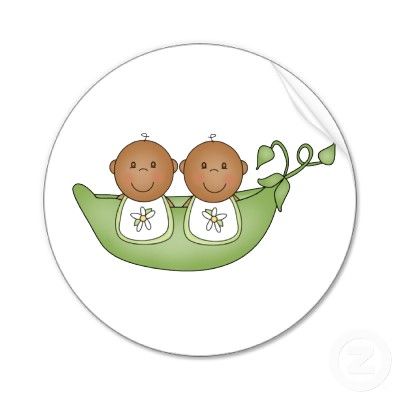
If two people are very similar, you might say they are like two peas in a pod.
There are several expressions about beans. If someone is very energetic, you might say she is full of beans. If you say something does not amount toa hill of beans, you mean it is of little importance. I might say you don’t know beans about a subject if you do not know anything at all about it. But if you spill the beans, you tell something that was supposed to be a secret.
Potatoes are a popular food in many areas. But something is considered small potatoes if it is not important. You probably would not want to hold a hot potato in your bare hands. This also means a problem or issue that no one wants to deal with. Someone might call you a couch potato if you sit and watch television all day and get little or no physical exercise.
Like potatoes, turnips are root vegetables that grow in the ground. Here is an old saying: you cannotsqueeze blood out of a turnip. That means you cannot get something from a person that he or she is not willing or able to give.
Farmers have to separate the valuable parts of their crops from the waste. So separating the wheat from the chaff means keeping what is valuable and rejecting what is worthless.
Students often have to take a difficult test to gain entrance to a special school. So you could say the ones who are chosen are the best ones, or thecream of the crop.
There is an old saying that forbidden fruit tastes the sweetest. That means some people get pleasure from doing something that they are not supposed to do.
Bananas are a popular fruit to eat. But if you go bananas, you are wild with excitement or worry.
Finally, let us talk about lemons. Lemons have a sour taste if you eat them plain. But lemons make a nice drink when you mix their juice with sugar and water. So here is an expression about lemons that we like: If life gives you lemons, make lemonade. This means you should always try to make the best of a bad situation.
Written on May 20, 2011 – 7:31 am | by talkingdictionary
Expressions about water are almost as common as water itself. But many of the expressions using water have unpleasant meanings.
The expression ”to be in hot water” is one of them. It is a very old expression. “Hot water” was used five-hundred years ago to mean being in trouble. One story says it got that meaning from the custom of throwing extremely hot water down on enemies attacking a castle.
That no longer happens. But we still get in “hot water.” When we are in “hot water,” we are in trouble. It can be any kind of trouble — serious or not so serious. A person who breaks a law can be in hot water with the police. A young boy can be in hot water with his mother, if he walks in the house with dirty shoes.
Being in “deep water” is almost the same as being in hot water. When you are in deep water, you are in a difficult position. Imagine a person who cannot swim being thrown in water over his head.
You are in deep water when you are facing a problem that you do not have the ability to solve. The problem is too deep. You can be in deep water, for example, if you invest in stocks without knowing anything about the stock market.
“To keep your head above water” is a colorful expression that means staying out of debt. A company seeks to keep its head above water during economic hard times. A man who loses his job tries to keep his head above water until he finds a new job.
“Water over the dam” is another expression about a past event. It is something that is finished. It cannot be changed. The expression comes from the idea that water that has flowed over a dam cannot be brought back again.
When a friend is troubled by a mistake she has made, you might tell her to forget about it. You say it is water over the dam.
Another common expression, “to hold water,” is about the strength or weakness of an idea or opinion that you may be arguing about. It probably comes from a way of testing the condition of a container. If it can hold water, it is strong and has no holes in it.
If your argument can hold water, it is strong and does not have any holes. If it does not hold water, then it is weak and not worth debating.
“Throwing cold water” also is an expression that deals with ideas or proposals. It means to not like an idea. For example, you want to buy a new car because the old one has some problems. But your wife “throws cold water” on the idea because she says a new car costs too much.
Written on May 19, 2011 – 6:12 am | by talkingdictionary
Cats are the most popular pets among Americans. So it is not surprising that there are many expressions about cats. Some cats like to catch small birds, like canaries. If someone looks very proud or satisfied with himself, we say he looks like the cat that ate the canary.
Sometimes, a cat likes to play with a small animal it catches.
So if you play cat and mouse with someone, you change between different kinds of behavior when dealing with another person. For example, a child might offer something sweet to her little brother and then take it away when he reaches for it.
A cat will often catch a small animal and present it to its owner. The saying that looks like something the cat dragged in describes something in bad condition.
Two old and funny expressions describe something that is the best or finest. Americans might say that something is the cat's meow and the cat's pajamas.
Children might call a child who is easily frightened a fraidy cat or a scaredy cat. A copycat is someone who acts just like someone else or copies another person's work. A fat cat is a person with a lot of money.
You may have known that cats spend most of their time sleeping. Sometimes people sleep for a short time during the day. This is called a cat nap.
If you tell about something that was supposed to be a secret, we say you let the cat out of the bag. If you are not able to speak or answer a question someone might ask if the cat has got your tongue.
Have you ever watched children in a classroom when their teacher leaves for a few minutes? When the cat's away, the mice will play means people sometimes misbehave when there is no supervision.
You may have heard this expression: curiosity killed the cat. This means being too concerned about things that are not your business might cause problems.
If your home is very small, you might say there is not enough room to swing a cat. But you probably should not try this at home!
If you ever had cats as pets, you know it is difficult to train them or to get them to do something. Cats are not like sheep or cows that can be moved in a group. So we say a difficult or impossible job is like herding cats.
We leave you with a song from the musical play, "Cats."
Written on May 18, 2011 – 2:39 pm | by talkingdictionary
A phrasal verb is a verb plus a preposition or adverb which creates a meaning different from the original verb.
Phrasal Verbs 4
do
something over, do someone over, do away with, do something up,
dress up, drop back, drop in, drop someone/something off, drop
out, eat out, end up, fall apart, fall out, figure somebody/something
out, fill something in, fill something up, find out, fit in,
freak out